

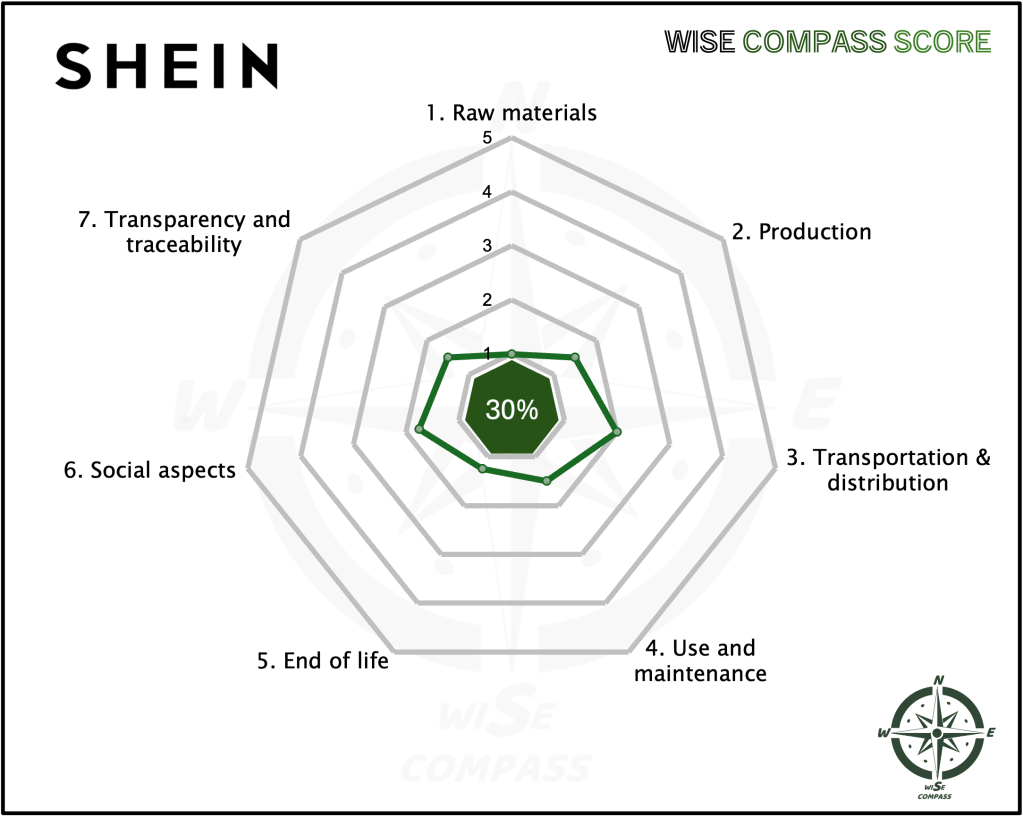
Shein has taken the fashion world by storm with its incredibly low prices and trend-chasing styles. But this breakneck speed comes at a cost. Let’s dissect their practices:
1. Raw Materials: 1/5 🌿
- 🟥 Shein predominantly relies on inexpensive, conventional materials like polyester, viscose, and cotton, which have significant environmental impacts.
- 🟥 Their production model prioritizes quantity and low cost, leaving little room for sustainable material sourcing.
- 🟥 The ultra-fast fashion cycle fuels a constant demand for new materials, further exacerbating the problem.
2. Production: 1.5/5 🏭
- 🟥 Shein’s supply chain is vast and opaque, making it extremely difficult to monitor labor conditions and environmental practices.
- 🟥 Reports of unsafe working conditions, low wages, and excessive overtime in some supplier factories raise serious ethical concerns.
- 🟥 The sheer volume of clothing produced puts immense pressure on resources and generates considerable waste.
3. Transportation and Distribution: 2/5 🚚
- 🟥 Shein’s global distribution network relies heavily on air freight, resulting in a significant carbon footprint.
- 🟧 While they utilize efficient logistics, the constant flow of new products and long shipping distances contribute to environmental impact.
4. Use and Maintenance: 1.5/5 👚
- 🟥 Ultra-fast fashion encourages a “disposable” mindset, with garments often designed for short-term use.
- 🟥 The low price point and trend-driven styles discourage repair and reuse, leading to increased textile waste.
- 🟥 Quality can be inconsistent, further contributing to a short lifespan for many items.
5. End of Life: 1.25/5 ♻️
- 🟥 Shein has minimal initiatives for recycling or responsible disposal of clothing.
- 🟥 The vast majority of their products end up in landfills, contributing to the growing problem of textile waste.
6. Social Aspects: 1.75/5 🤝
- 🟥 Shein faces significant challenges regarding labor rights and ethical sourcing.
- 🟥 Transparency about their supply chain is limited, making it difficult to assess and address social issues.
7. Transparency and Traceability: 1.5/5 🔍
- 🟥 Shein provides minimal information about its supply chain and production practices.
- 🟥 Traceability of materials and labor conditions is extremely limited.
Overall Score: 29.3% 📉
Shein’s overall score of 29.3% reflects the serious sustainability challenges associated with the ultra-fast fashion model. Their reliance on cheap materials, opaque supply chains, and a culture of disposability raises significant concerns.
What Do You Think?
Can ultra-fast fashion ever be sustainable? What responsibility do consumers have? Share your thoughts!
#Shein #UltraFastFashion #Sustainability #EthicalFashion #WiseCompass
 The Wise Compass
Leave a comment